
After 35 years of sitting in strategy sessions with some of the world's most senior leaders, be they boardrooms in crisis, offsites under pressure or executive retreats the week after a market shock, I have noticed something.
The organisations that navigate uncertainty well are not smarter, better resourced or luckier than the ones that do not. They just ask better questions. Consistently. Three specific questions, in the right order, every time. I call them the three whats.
What Is Really Going On?
Most leadership teams think they already know the answer to this one. They do not. What they know is the story they have told themselves about what is going on, filtered through their biases, their blind spots and the sanitised version of reality their organisation has learned to present upward.
The single most common failure I see is not bad strategy. It is leaders acting decisively on the wrong picture of reality. The strategic leaders who outperform build habits that counteract this. They sense their environment deliberately. They ask hard questions. They create conditions where people feel safe enough to tell them what is happening, not what they want to hear.
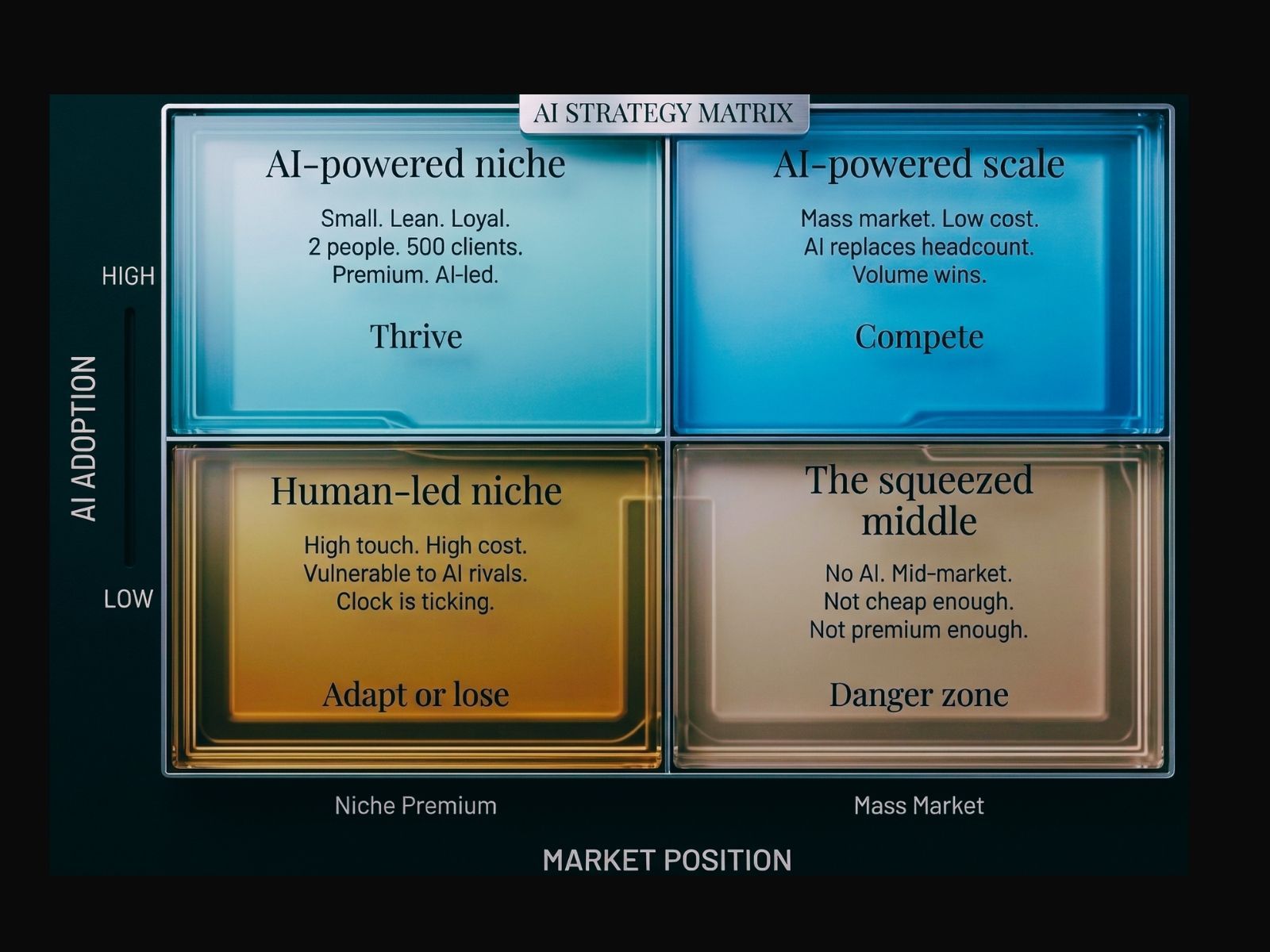
The competitive landscape is being redrawn around AI adoption. Mass-market players are deploying AI to drive costs down. Niche premium operators are using AI to deepen their offer and serve fewer clients better. The businesses caught in the middle are exposed on both flanks. Before any strategy conversation, the first question is always: what is really going on here?
What Are Our Options?
Most leadership teams present two options to the Board. Option A is what they have always done. Option B is the obvious next move everyone can already see. Neither of these is a strategy. They are a false binary.
The quality of your eventual decision is almost entirely determi